Wednesday, January 4, 2012

Tic Toc - Waiting on the Tick


When I showered I felt something in my groin and flicked it off. Looked to me like a green seed pod but when I stepped on the pod a lot of blood spurted out. My blood. Ouch.

It was a tick. Specifically, the tick was Amblyomma cajennense. This tick is found mostly in the jungle and likes to prey on animals.
Amblyomma cajennense

There was a small black central puncture wound with an area of redness around the bite that was about half a centimeter wide.

I had showered for dinner the night before and surely would have noticed the tick then, so my thoughts are that the tick arrived overnight, perhaps picked up in my clothes earlier that day. As this thought settled, I recollected an itch in the same area overnight. The itch was likely the bite. I didn’t check the time, I just rolled over and went back to sleep. I only slept for six hours that night, so the tick was attached for a maximum of six hours and this detail is important because the duration is correlated with the risk of infection with Rickettsiae rickettsia, which causes Rocky Mountain Spotted Fever, or just Spotted Fever in Latin America.

I immediately took some clarithromycin, which I had on hand, and the next day I obtained Doxycycline, which is the recommended treatment.

The incubation period for Rocky Mountain Spotted Fever ranges from 3 to 12 days. The tick needs to be attached for 2 to 10 hours for the Rickettsiae to be released from the tick salivary gland and an earlier onset of symptoms occurs when there is a large volume of the inoculum. I likely have a low risk for infection, but there is a risk. I will just have to wait and see. 

Tic Toc - waiting on the Tick.
Fisherman Walking Home at Sunset

Tuesday, January 3, 2012

Interpreter Success


My decision to hire interpreters for this trip to Nicaragua was a good one. I feel more confident that the mothers understand my recommendations.

The interpreter this week is Jessica Southern. Jessica is not only bilingual, but she is an American paediatric nurse. Wow! What a great combination for my work! Jessica works for FIMRC, a US charity, at the Las Salinas community clinic, but the clinic is closed this week, so she kindly agreed to help me. Jessica is terrific.

We saw 9 patients today and we saw them in 5 hours, which is fast compared to past visits. I typed out the basics of the treatment plan and Jessica communicated the recommendations to the mothers. After two days, we are a good team. This was my best clinic day yet!

The sickest child was a boy with a history that suggested urinary retention. He had past history of treatment for urine infection and kidney stone. I hear these diagnoses a lot and the histories do not usually fit with these diagnoses. My sense is that any urine problem in Nicaragua is diagnosed as infection or stone or both. The boy was 12 years old and had pain severe enough to make him cry. During the episodes of pain he felt as if he needed to pee but he could only pass small amounts. His urine today did not show infection or blood, and he had an episode last night, which makes infection and stone unlikely. He had a very narrow pee hole at the end of his penis. Jessica arranged for him to have an ultrasound at the Las Salinas clinic and to see the pediatric surgeon who comes up from Rivas once a week.

A fourteen-month old boy was brought in for recurrent hives, which Mom was convinced was due to beans, beef, and shrimp. From the age of 8 months he has experienced itchy bumps. He had typical papular urticaria, which is usually an allergic or immunological response to insect bites and not usually to food. The clinic pharmacy had an anti-histamine, which I asked Mom to give him at bedtime on the real itchy days.

A 12 year-old boy came in with typical migraine. He told me the headaches were much worse when he was walking on really sunny days. The sunlight in Nicaragua is very bright and I have no doubt this would aggravate the headache in any person with migraine. Poor hydration likely also plays a role in his headaches. I treated him with Naproxen and Jessica reviewed the migraine- teaching handout I prepared with Mom.

The days whiz by in the clinic. This is no different than at home. One child after another until the waiting room is empty.

Most of the children today did not have a chart at the clinic, which means this was their first visit. They came to see the Canadian Doctor.


This immature Tri-colored Heron was fishing in the late afternoon. 
The sun was very bright and the bird opened up the wings to create a shadow so the fish in the small pools would be easier to see. 
  

Monday, January 2, 2012

Prevention. Prevention. Prevention.


Dad brought in his five year-old son with fever and sore throat.
He had the typical vesicles of coxsackie virus. The throat is very red and sore, and the neck glands are enlarged. Unless the typical vesicles are noted on the tonsillar pillars, many children are treated with an antibiotic as per strep throat, but this is a virus, lasts a week,
and fever control and hydration are all that is necessary. 
I now have contacts in the region. Bo Fox, who I met on the last trip, and Sheyla and Jessica, who help as interpreters with this visit, live in different
communities in the region. Within an hour of the clinic, there are seven communities along the dirt road to the north or south. At the next visit I will try to organize community teaching sessions on a variety of common paediatric topics.

Back in Canada I will develop a PowerPoint presentation in Spanish and on the next trip we will find community locations with electrical power, hopefully a fan, and enough room and chairs for local mothers to come. We will advertise the sessions locally for several weeks before the event. I will plan a two-hour session and cover four basic topics. After each thirty minute session, I will answer questions. We will provide water, juice, and nutritious snacks for the families. Sounds good. Hope we can do this. 

The basic topics I will present will include: 
1. how to disinfect well water with SODIS. 
2. how to prevent worm disease. 
3. the principles of good nutrition.
4. the principles of good hydration. 
5. how to use oral rehydration solution for diarrhea.
6. how to treat fever.

Every Mother will be asked to bring the immunization cards for her children and we will check the immunization status and advise the mother if she needs to get caught up at the next public immunization day in her community.

Every mother who attends will be provided with: 
1. Mebendazole, three day course, for worms
2. Metronidazole, three day course for parasites
3. Multivitamin for two months
4. Acetaminophen to have on hand for fever 
5. Enough Oral Rehydration Solution powder to make two litres. 
5. Spanish teaching handouts on worms, parasites, nutrition, hydration, fever, and diarrhea. 

Howler Monkey who watched me very carefully this morning.
The loud roars of the males at dawn and dusk can be heard for miles 
and serve to delineate territories. 


Sunday, January 1, 2012

Foot Wounds on the Beach

Many Nicaraguans walk barefoot, which seems impossible to me, but I see this all the time. The pathways, the beach, and the dirt roads are definitely not foot-friendly for Gringos like me. Nicaraguan soles must be like leather. 

Over the last two days I was asked to assess two Americans with foot injuries. 

A middle-aged man was stung by a sting ray as he was walking in the surf. He felt severe pain and pulled out the stinger from the side of his foot. His fingers started to tingle from the venom and he dropped the stinger. He described the pain as the worst he ever experienced. The puncture wound at the side of his foot was surrounded by a black area about 2 cm by 1 cm. I did an Internet search on sting ray wounds and venom and learned that for foot injuries the most serious common complication is if the stinger penetrates the bone which can lead to osteomyelitis (bone infection) or if the stinger breaks off and leaves a foreign body which invariably gets infected. The worst aspect of the acute injury is the severe pain, which is ameliorated by intense heat. I checked with the fellow the next day and he was feeling great, so infectious complications are not a concern. 

The second person was a high school senior who stepped on something sharp on the beach. He had a very painful, hot, swollen area below his third toe and when he moved the toe, the pain was intense, which implied the tendons or muscles that controlled the toe were inflamed. I treated him with ciprofloxin, anti-inflammatory medications, hot soaks, and elevation. I checked on him earlier today and he is improved with less tenderness and swelling. All good.


Snowy Egrets must have tough, no slip toes 
             because they land on the beach and rocks with no problem. 


Sexual Predators in Nicaragua

Tim Rogers is the Editor of Nicaragua Dispatch, an excellent online daily that provides news in English. I met Tim during my April 2011 trip to Nicaragua. Recently he featured an article on child sexual abuse in Nicaragua. 

http://www.nicaraguadispatch.com/features/sex-predators-find-easy-prey-in-nicaragua/1498 

The article featured a photo of an arrested sexual predator and I realized immediately that I had seen this man during a trip to Granada. 


Granada, the fourth largest city in Nicaragua, was founded in 1524 by the Spanish, and the history, architecture, and location on the shores of Lake Nicaragua make the city an important tourist destination. The central square is bounded by a beautiful cathedral and several prominent hotels. The plaza is busy with lots of vendors who sell leather goods, jewelry, pottery, nuts, t-shirts, and other tourist stuff.

In October 2010, I spent a tourist afternoon in Granada. I noticed a middle-aged white man and suspected immediately that he was a predator. He was sitting with a ten or so year-old Nicaraguan boy on a park bench. The boy looked self-conscious and held his head down without making eye contact with the man. Everything about this scene was wrong. I wandered in and out of the central plaza over the course of an hour or two and I saw the man again with another child.

The plaza was filled with adults and there were lots of children who were selling merchandise on behalf of these adults. No one seemed interested at all in either the man or the child, which seemed so strange. Don't the Nica adults see what is going on? 

On the one hand I felt as if the rest of the adults in the plaza must be blind. There were numerous security people outside the hotels that ringed the plaza, and the Granada Police were routinely present in the square, and they all cast blind eyes on the situation. 


Then I wondered, Oh my gosh, is this just the way it is in Nicaragua?

In the article, Tim Rogers reports, sadly, that this is how it is in Nicaragua.


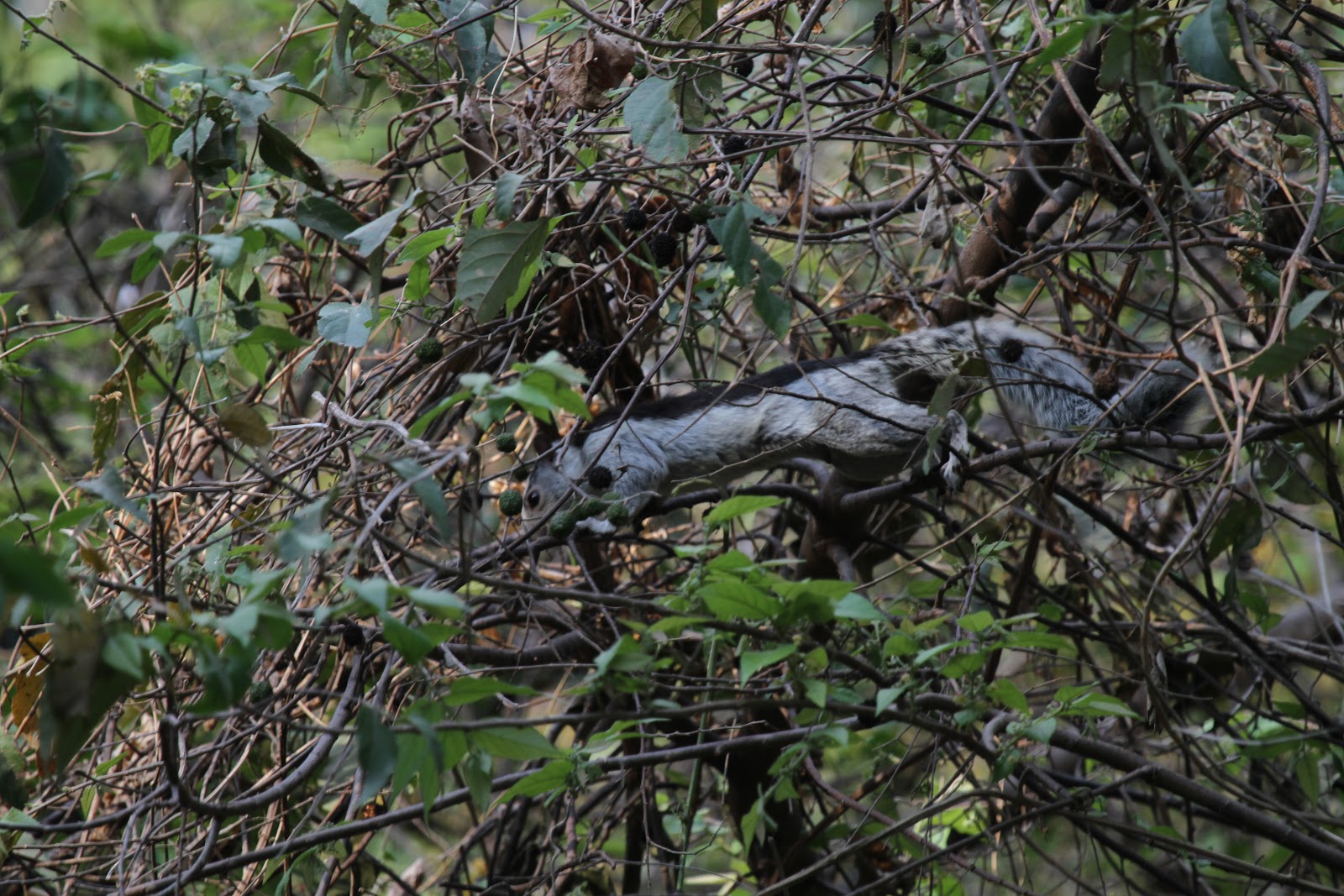
This Variegated Squirrel chattered at me
                                          during my morning walk.